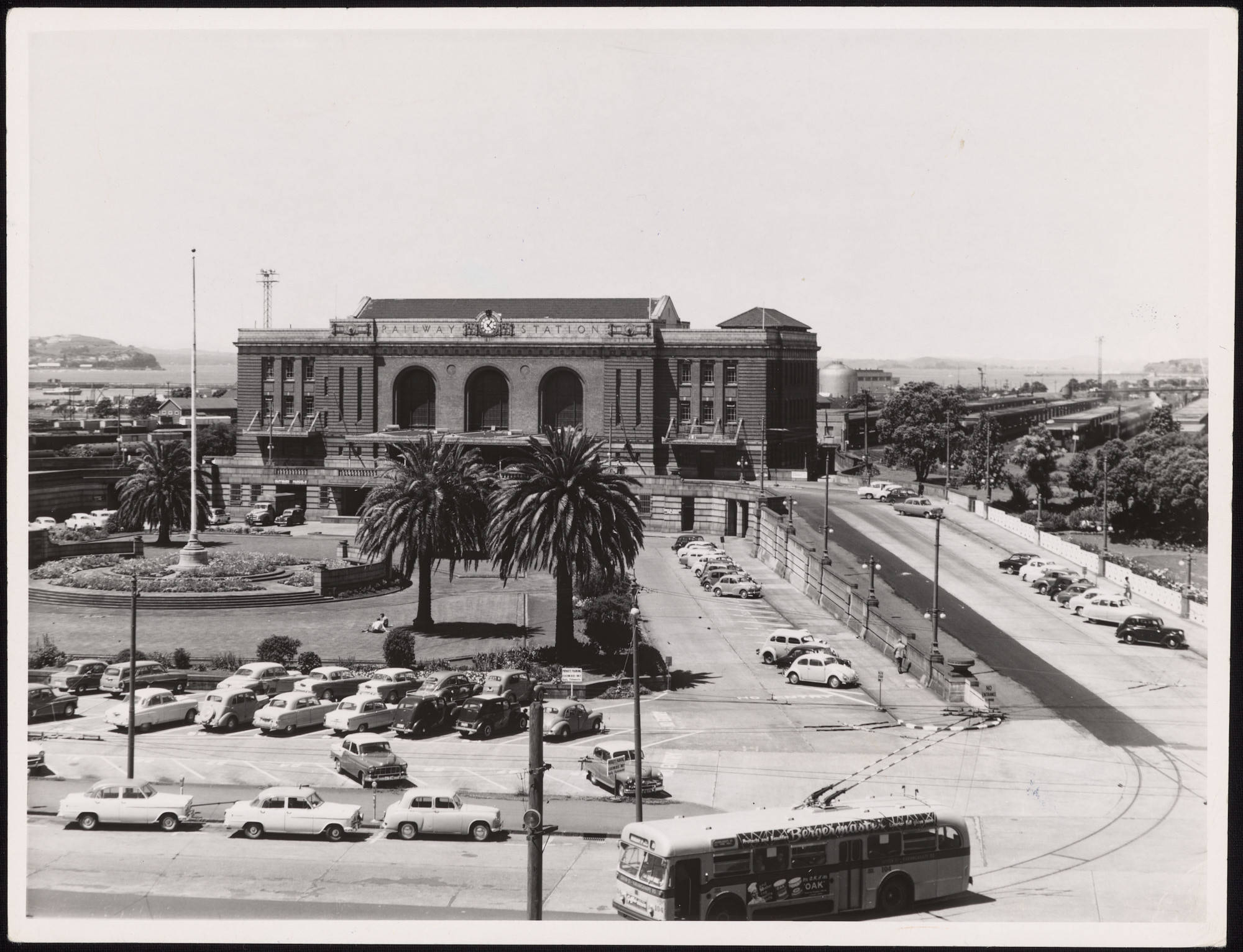

The former Auckland Railway Station, with its brick facade and arched entranceways.

Auckland · Since 1930

The story of the station

A grand point of arrival, a familiar city landmark and now a place to stay

A building made for arrival

Opened in 1930 as Auckland's grand railway gateway, the station welcomed generations of travellers through its brick arches and great ticket halls. The trains have moved on, but the building's sense of arrival remains.

Te Tōangaroa

Long before the station, this was part of a tidal bay connected with the Māori history of Tāmaki Makaurau and Ngāti Whātua Ōrākei. Te Tōangaroa recalls the long dragging of waka to shore as the tide receded—a place of arrival, exchange and movement before roads and railway yards reshaped the waterfront.

Later called Mechanics Bay, the shoreline was gradually reclaimed for industry, wharves and rail. Beach Road still traces the edge of the harbour as it once was. In 2024, Te Tōangaroa became the official name of the surrounding waterfront precinct.

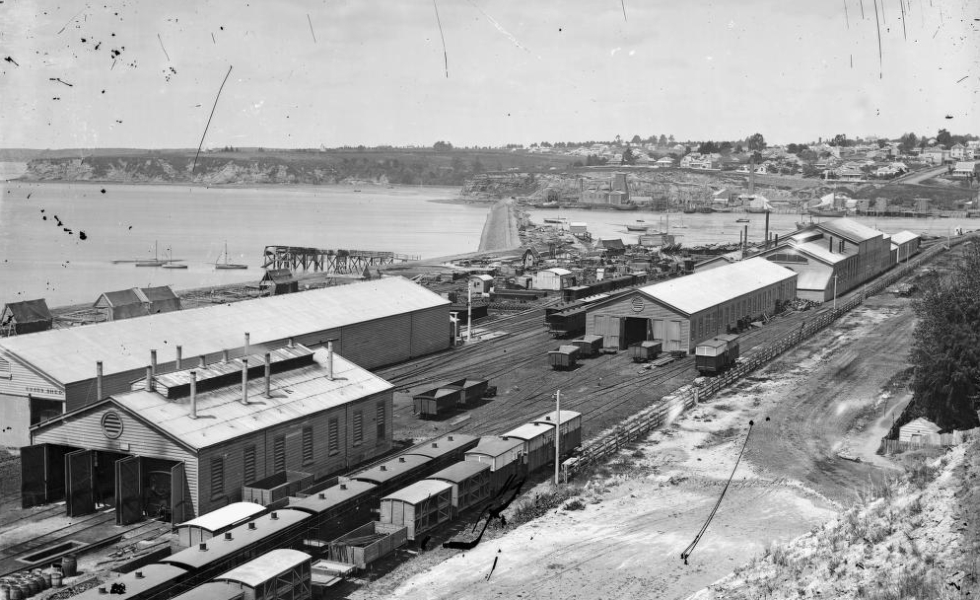
Historic railway sheds, trains and tracks beside Auckland's waterfront before the present station was built.

1928–1930

A new gateway for Auckland

Built by the New Zealand Public Works Department on reclaimed land near the waterfront, the new station replaced Auckland's smaller terminal near Britomart. It officially opened on 16 November 1930.

At £320,000, its construction was the largest independent contract awarded in New Zealand at the time. Architect William Henry Gummer shaped it as a monumental Beaux-Arts gateway to the city.
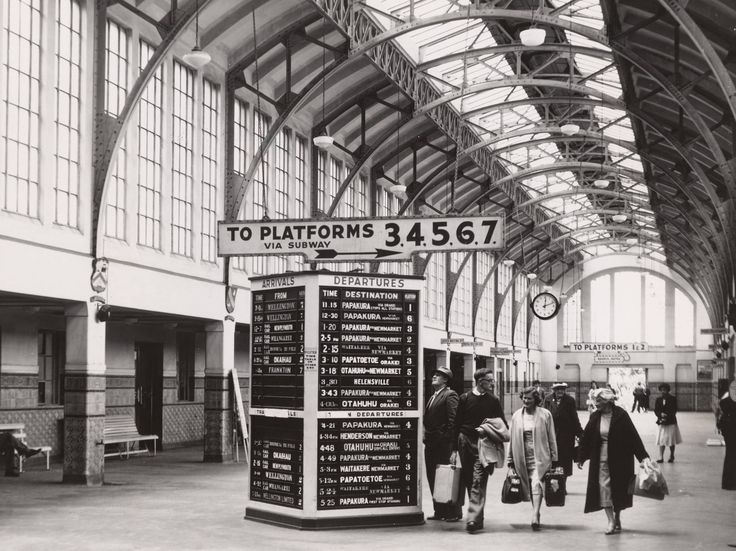
Passengers walking through the station concourse beside the departures board and signs to platforms 3 to 7.

1930 onwards

Built for the rhythm of a city

From its opening in 1930, the booking halls, concourse and platforms carried the daily movement of Auckland: commuters heading to work, families beginning long journeys and visitors arriving in the city. Its scale reflected both the ambitious public-building programme of the 1920s and the central role rail played in connecting communities across New Zealand.

The station was designed to be practical without feeling ordinary. A soaring concourse organised passengers around its departures board and platform signs, while terrazzo floors, carved stone, brickwork, clocks and chandeliers brought ceremony to the journey. Many of those original details remain visible and continue to shape the experience of Grand Central Hotel today.

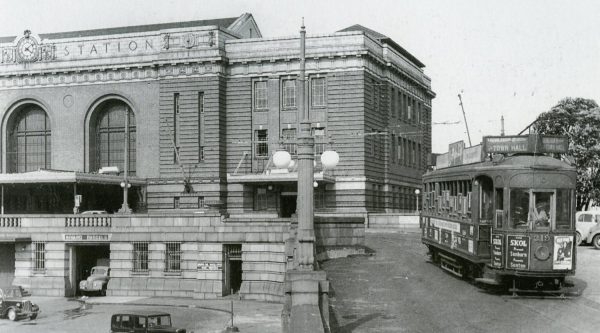
Historic Auckland Railway Station with a tram passing the Town Hall platform outside.

1999–2003

After the last departures

The main building began a new chapter in 1999 when it was converted into the Railway Campus, providing 426 rooms across 230 student apartments. The platforms remained active until July 2003, when regular passenger services transferred to the newly opened Britomart Transport Centre.

One platform briefly continued to serve peak-hour suburban trains, and excursion services returned occasionally over the following years. In August 2011, part of the station reopened as The Strand, initially prepared as a backup during the Rugby World Cup.

The Strand remains beside Grand Central Hotel as an emergency terminus and a stopping point for selected services. Its tracks, platforms and occasional arrivals preserve a living connection with the purpose for which the building was created.

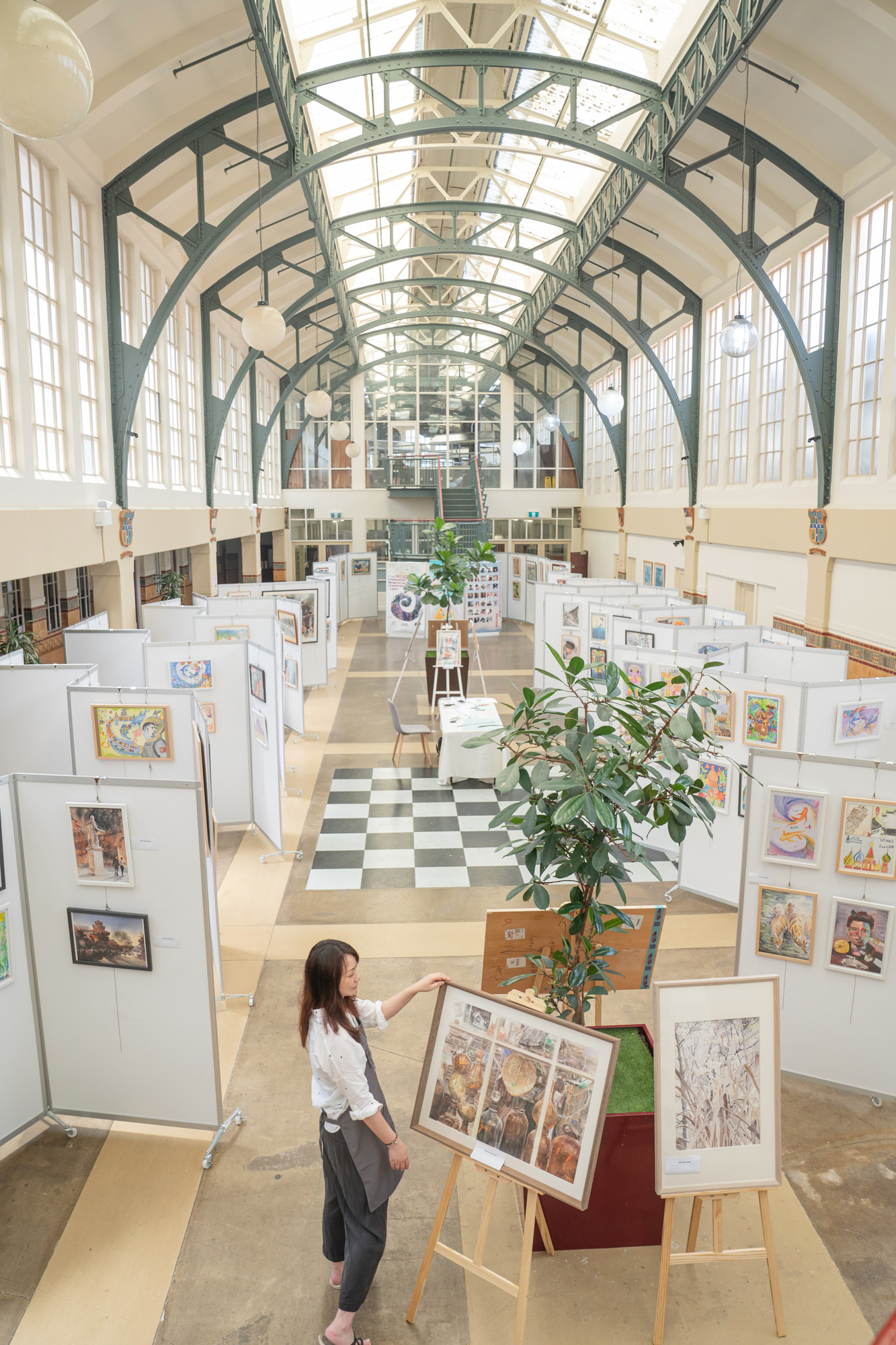
An art exhibition arranged beneath the steel arches and skylights of the station's former concourse.

2023–today

A new cultural chapter

Since 2023, the former station has welcomed artists and a growing programme of exhibitions and events. Its distinctive halls have also provided a setting for film, music, fashion and major cultural gatherings.

Today accommodation, dining and the arts share the original heritage setting. Grand Central Hotel is not a recreation of the railway era, but a comfortable Auckland stay shaped by the character of the landmark that came before it.

On screen

A landmark ready for another role

The station's scale lets it play civic, historic or futuristic without losing its own identity.

1982

David Bowie & The Clash

Merry Christmas, Mr. Lawrence transformed the booking hall into a wartime tribunal. That same year, TVNZ interviewed David Bowie between takes and The Clash on the station platforms.

2021–23

New worlds

The former station appeared among Auckland locations used for Netflix's live-action Cowboy Bebop and the second season of the dystopian New Zealand comedy Creamerie.

Explore arts, film & events

The station in brief

View the station timeline
  1. The new Auckland Railway Station opens as the city's grand rail gateway.

  2. David Bowie and Ryuichi Sakamoto film Merry Christmas, Mr. Lawrence inside.

  3. A casino consortium backed by Donald Trump unsuccessfully seeks the railway land.

  4. The building becomes the University of Auckland's Railway Campus.

  5. Main services move to Britomart; two former platforms later reopen as The Strand.

  6. Accommodation, art, hospitality and events animate the landmark again.

Make the station part of your Auckland stay

Simple, comfortable rooms within one of the city's most memorable heritage buildings

Explore the rooms Back to Grand Central Hotel